Over/Under Basketball Betting: NBA Match Totals and Pace Analysis
 Available in US
My first totals bet felt like discovering a different sport entirely. I had spent months wrestling with spreads and moneylines, trying to predict winners and margins, when a friend suggested I ignore the winner completely and focus on combined scoring instead. Lakers versus Clippers, total set at 223.5. Both teams could not stop each other that season, and I took the over without caring who won. Final score: 118-112. Combined: 230. My stake doubled, and I started looking at every game through a new lens.
Totals betting removes the question that consumes most basketball bettors: who wins? Instead, you assess whether both teams together will score more or fewer points than the bookmaker’s line. The NBA’s high-scoring nature makes this market particularly compelling, with average game totals fluctuating between 215 and 230 points depending on era, pace trends, and defensive philosophies. You are not betting on talent or matchups in the traditional sense. You are betting on game flow, tempo, and the factors that push scoring up or down.
The UK sports betting market generates £16.8 billion in gross gambling yield annually, with online remote betting growing 8% year-over-year to £1.42 billion in the most recent quarter alone. Basketball represents a small but rapidly growing segment of that market, particularly among younger demographics. Roughly 57% of UK NBA viewers fall below age 35, and this audience brings fresh perspectives to betting markets, including greater comfort with data-driven approaches like totals analysis.
The 2025-26 NBA season has drawn extraordinary attention, with national broadcast viewership surging 92% year-over-year through the early months. That heightened engagement brings more casual money into betting markets, money that overwhelmingly backs overs because watching high-scoring games is more entertaining than defensive battles. This public tendency creates systematic opportunities for those willing to bet against popular sentiment when the numbers justify it.
If you prefer focusing on individual performances rather than team scoring, exploring NBA player props betting can offer highly profitable opportunities.
Basketball Over/Under Match Totals Mechanics
The mechanics are straightforward. Sportsbooks set a total representing their expected combined points for both teams. If the line reads 224.5, the over wins when combined scoring hits 225 or higher, and the under wins at 224 or below. Half-points eliminate pushes, just like in spread betting, ensuring every wager produces a winner or loser without stake returns complicating the maths.
UK sportsbooks display totals with decimal odds, typically around 1.91 on each side. That pricing reflects the bookmaker’s margin, with a fair market pricing both sides at 2.00. The difference between 1.91 and 2.00 represents the vig you pay for the privilege of betting, and understanding this cost matters because long-term profitability requires winning at a rate that overcomes it. At standard juice, you need to win approximately 52.4% of your totals bets just to break even.
Overtime creates an interesting wrinkle that catches newcomers off guard. Most standard totals bets include overtime scoring. If regulation ends 108-108 and the game goes to overtime finishing 120-118, the combined 238 points counts toward your bet. This overtime inclusion shifts probabilities subtly toward overs, since any overtime adds points that otherwise would not exist. Some sportsbooks offer regulation-only totals at slightly different prices, which can offer value in games between evenly matched teams likely to extend beyond four quarters.
The question of what constitutes a “push” confuses some bettors coming from other markets. In totals betting, a push occurs when the combined score lands exactly on a whole-number line. If the total is 224 and the final combined score is exactly 224, both over and under bettors receive their stakes back without profit or loss. Bookmakers use half-points precisely to avoid this outcome, since games cannot end in half-point increments. When you see a total of 224.5, pushes become mathematically impossible.
Team totals represent a related market worth understanding. Rather than betting combined scoring, you wager on one team’s individual point total. If Boston’s team total sits at 114.5, you bet whether they exceed or fall short regardless of their opponent’s output. Team totals allow you to isolate your analysis on one side of the court, useful when you have strong conviction about one team’s offensive output but uncertainty about their opponent.
Alternative totals provide another layer of flexibility. You can buy points just like with spreads, moving the total from 224.5 to 220.5 at reduced odds or to 228.5 at enhanced odds. These alternative lines prove valuable when your projection sits close to the primary line but you want additional cushion in one direction. The pricing reflects probability, so buying four points typically costs significant odds reduction.
Pace Factor: The Key Metric for Totals
Every serious totals bettor eventually encounters pace, and understanding it separates analytical approaches from guesswork. Pace measures possessions per 48 minutes, essentially capturing how fast a team plays. High-pace teams push tempo, run in transition, and create more scoring opportunities for both sides. Low-pace teams grind possessions, control rhythm, and suppress overall scoring. When two high-pace teams meet, overs hit more frequently. When two grinding teams collide, unders prevail.
Finding pace data requires minimal effort. Basketball Reference publishes team pace statistics updated daily during the season, sortable by various time frames. I check pace rankings before every totals bet, treating significant pace mismatches as red flags regardless of what other factors suggest. A top-five pace team hosting a bottom-five pace team creates uncertainty that the totals market may not fully capture.
The NBA App has seen engagement surge among UK users, with viewership up 52% year-over-year and average weekly time on the platform climbing 24%. This increased exposure helps casual bettors follow teams more closely, but pace statistics rarely feature in mainstream coverage. The analytical bettor who digs into pace data maintains an information advantage over the casual viewer who bets based on team names and recent highlights.
Pace changes throughout games in predictable patterns. First halves often run faster as teams test each other’s defensive schemes. Fourth quarters slow dramatically in blowouts when winning teams kill clock and losing teams accept defeat. Close games maintain pace through the final minutes as both teams maximise possessions. Thinking about likely game flow helps project whether a total sits at the right level.
Matchup pace matters more than individual team pace in isolation. The Celtics might average 102 possessions per game, but that number shifts depending on their opponent. Against Phoenix, another fast team, possessions might spike to 106. Against Miami’s deliberate style, possessions might dip to 98. Historical matchup data reveals these tendencies, and ignoring opponent effects leads to consistently inaccurate projections.
Coaching philosophy drives pace more than personnel in many cases. Some coaches push tempo regardless of roster construction. Others prioritise half-court execution no matter their players’ athletic profiles. When coaching changes occur mid-season, pace often shifts before the roster does. Tracking these philosophical tendencies at the coaching level provides edge that player-focused analysis misses.
League-wide pace trends also influence how you should approach totals betting across entire seasons. When the league collectively plays faster, as happened during the early three-point revolution years, totals rise across the board and adjustments to historical baselines become necessary. Recognising these macro shifts prevents you from applying outdated mental models to current games.
Using Offensive and Defensive Ratings
Pace tells you how many possessions will occur. Offensive and defensive ratings tell you what happens on those possessions. Offensive rating measures points scored per 100 possessions, while defensive rating measures points allowed per 100 possessions. Combining these metrics with pace creates a projection framework for expected scoring.
A simplified projection works like this: if Team A has a 115 offensive rating and Team B has a 110 defensive rating, you might expect Team A to score roughly 112.5 points per 100 possessions against that specific defence. Adjust for pace to convert from per-100 figures to expected game output, and you have a rough points projection. Repeat for both teams and you have a total estimate to compare against the market line.
Net rating, the difference between offensive and defensive ratings, measures overall team quality but proves less useful for totals betting. A plus-10 net rating tells you a team outscores opponents significantly, but it does not reveal whether that comes from dominant offence, elite defence, or balanced contribution. For totals purposes, you need the component ratings separated.
Strength of schedule adjustments complicate the picture in important ways. A team posting a 115 offensive rating against weak defences might manage only 108 against elite ones. Late-season ratings reflect aggregate performance that may not represent current form or specific matchup difficulty. I apply roughly 10-15% regression toward league average when projecting any team’s rating against strong opposition.
The three-point revolution has pushed offensive ratings steadily higher over the past decade, as industry analysts have documented extensively. Teams shoot more threes, which produce more variance per possession. A team hitting 45% from deep one night might hit 31% the next with identical shot selection. This variance makes totals harder to predict precisely but creates inefficiencies that sharps exploit by identifying when variance is likely to regress.
Stay ahead of the bookmakers with the latest insights from CourtEdge throughout the entire season.
Situational Factors for Totals Betting
Back-to-back games consistently push totals lower, though the market prices this factor reasonably well. Fatigued legs mean slower pace, worse shot quality, and more defensive breakdowns that paradoxically reduce scoring because tired players commit more turnovers. When both teams play back-to-backs, the effect doubles. I track schedule asymmetry carefully, looking for matchups where one team rested while the other traveled and played the previous night.
Altitude matters in ways unique to Denver. The Nuggets play home games at over 1,600 metres elevation, where visiting teams struggle to maintain oxygen efficiency, particularly in fourth quarters. Historical data shows Denver home games trending toward overs as visiting teams tire and defensive effort declines. The market has learned this tendency over time, but occasional mispricing still appears when Denver faces teams with particularly shallow rotations.
Revenge games and rivalry matchups attract casual over money because fans expect exciting high-scoring affairs. The data supports modest scoring increases in these spots, but the line movement often exceeds the actual effect. I fade obvious revenge narratives when totals move beyond where pace and ratings justify, treating public money inflation as an opportunity rather than a signal.
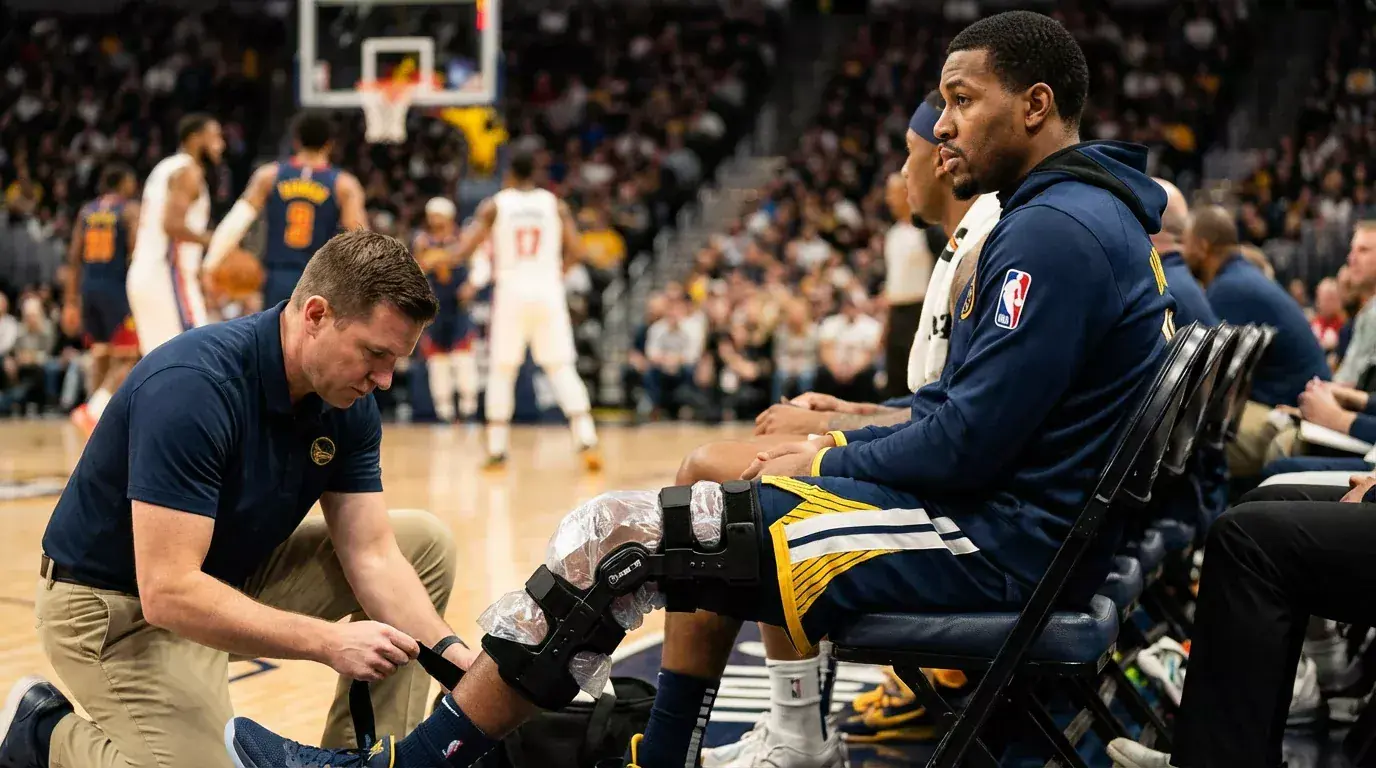
Injury reports affect totals more subtly than spreads or moneylines. A missing scorer obviously reduces one team’s offensive potential, but it also changes defensive matchups and rotations in ways that ripple through both sides of the ball. When a high-volume scorer sits out, the total should drop, but sometimes not by as much as naive analysis suggests because teammates absorb shots that might have been lower-efficiency anyway. Contextual injury analysis beats mechanical point-per-minute adjustments.
Rest advantages after extended breaks create scoring spikes in the first quarter that often fade as games progress. A team returning from a five-day all-star break might come out firing, pushing the total toward overs early, then settle into normal rhythms by halftime. First-half totals can capture this effect more efficiently than full-game lines in certain situations.
Early season totals carry extra uncertainty because team rotations remain unsettled, new players are integrating, and offensive systems are developing. I reduce my totals activity during October and November, waiting for reliable data to accumulate before betting aggressively. The first 15-20 games of each season function more as information gathering than profit generation.
Nationally televised games attract heavier public over betting, inflating lines beyond analytical fair value. When a game appears on prime-time broadcasts, the casual viewership spikes and so does casual wagering. These situations often present under value simply because the entertainment-seeking public has pushed the number too high. Tracking broadcast schedules and timing your bets accordingly creates systematic edge.
First Half and Quarter Totals
Period betting offers granular control that full-game totals cannot match. First-half totals typically sit at roughly 51-52% of the full-game line, reflecting slightly higher first-half pace and scoring that decline as games progress. If you expect an unusually high-scoring first half followed by substitution patterns that slow the second half, first-half overs might capture your thesis better than full-game overs.
First-quarter betting amplifies variance dramatically. With only 12 minutes of action, shooting variance dominates, and one team hitting five consecutive threes can swing the quarter total by itself. I approach first-quarter totals cautiously, treating them as higher-risk plays suited for smaller stakes rather than primary betting volume.
Third-quarter patterns reflect coaching adjustments made at halftime. Teams that struggled offensively in the first half often simplify schemes and attack weaknesses identified during review. Defensive adjustments similarly take hold, sometimes suppressing scoring, other times creating confusion that offences exploit. The third quarter is basketball’s most volatile period, making it simultaneously attractive and dangerous for totals betting.
Fourth-quarter totals depend heavily on game state. Close games maintain normal pace through the finish. Blowouts see starters exit, scrubs enter, and scoring efficiency collapse even as pace might increase from rushed possessions. Predicting fourth-quarter totals requires predicting game state, which essentially requires predicting the spread, undermining the totals-specific analysis that makes other periods more tractable.
Live totals adjust continuously as the game unfolds, offering opportunities to bet mid-game when your assessment diverges from real-time market pricing. If you projected a game to land around 220 but it starts slowly and the live total drops to 212 at halftime, the over at the new number might represent better value than your pre-game bet. Maintaining projections and comparing them against live markets creates edge unavailable to pre-game-only bettors.
Historical Totals Trends in the NBA
The three-point revolution transformed NBA scoring over the past decade. When Steph Curry’s Warriors proved that volume three-point shooting could anchor championship offences, the league followed. Pace increased, three-point attempts climbed, and totals moved from the 190s to the 220s on average. Understanding this evolution helps contextualise current totals within broader trends rather than treating each game in isolation.
League Pass subscriptions grew 10% in the current season while platform viewing time increased 8%, indicating sustained engagement even as the novelty of the three-point era fades. This steady viewership suggests the high-scoring style resonates with audiences, reinforcing the league’s commitment to pace-and-space basketball. For totals bettors, this means expecting continued offensive orientation rather than defensive regression.
Playoff totals historically run lower than regular-season totals for the same matchups. Intensity increases, defensive effort rises, and coaches make adjustments that suppress efficiency. A regular-season game between two teams might post a 225 total, while their playoff meeting prices at 218. This compression reflects genuine probability shifts, not merely market inefficiency. I adjust my projections downward by roughly 3-5% for playoff games compared to regular-season baselines.
Season-over-season comparisons reveal whether the league is trending faster or slower. Rule changes, officiating emphases, and stylistic shifts all influence pace and scoring in ways that move totals markets. The current era emphasises spacing and shooting, but defensive innovation could swing momentum the other direction eventually. Staying attuned to these macro trends keeps your projections calibrated correctly.
The opening night of the 2025-26 season drew 5.6 million viewers, the highest figure since 2010, signalling renewed mainstream interest in NBA basketball. This surge in attention translates directly to betting market activity, with more money flowing into totals markets from casual participants. Understanding that the betting public has grown larger and more entertainment-focused helps explain why over money often exceeds fair value on high-profile games.
Tracking line moves on totals provides information about sharp money positioning. If a total opens at 224 and moves to 226 with minimal public attention, professional bettors likely bet the over. If it opens at 224 and drops to 222 despite public over preference, sharps likely bet the under. These movements do not guarantee results but offer useful context about where sophisticated money sits.
The correlation between scoring trends and rule enforcement deserves attention. When the league cracks down on defensive contact, offensive ratings rise and totals follow. When officials allow more physical play, scoring dips. Monitoring officiating emphasis memos and early-season enforcement patterns helps predict where totals should sit relative to preseason expectations.
The comprehensive basketball betting guide provides essential context for understanding how totals fit within the broader landscape of NBA wagering opportunities available to UK punters.
Yes, standard totals bets include overtime scoring. If a game ends 115-115 in regulation and finishes 125-120 after overtime, the combined 245 points counts toward your bet. Some sportsbooks offer regulation-only totals at different odds, which exclude overtime scoring entirely.
Why do NBA totals vary between sportsbooks?
Different sportsbooks use different models, receive different betting patterns, and manage liability differently. One book might see heavy over money and raise their total while another sees balanced action and maintains the original number. Line shopping across multiple accounts captures these discrepancies for better value.
Are overs or unders more profitable in NBA?
Neither side shows consistent long-term edge because markets price both efficiently. Public bettors slightly prefer overs due to entertainment value, which occasionally inflates over prices beyond fair value. Profitability comes from identifying specific game situations, not blindly backing one side.
How does pace affect total points in basketball?
Pace measures possessions per game, directly determining scoring opportunities. High-pace teams create more possessions, producing more shots and more points for both sides. Low-pace teams suppress possessions, capping scoring potential. Matchup pace between specific opponents matters more than individual team averages.
Prepared by the how to bet Basketball editorial staff.