March Madness Betting Odds: NCAA Tournament Brackets
 Available in US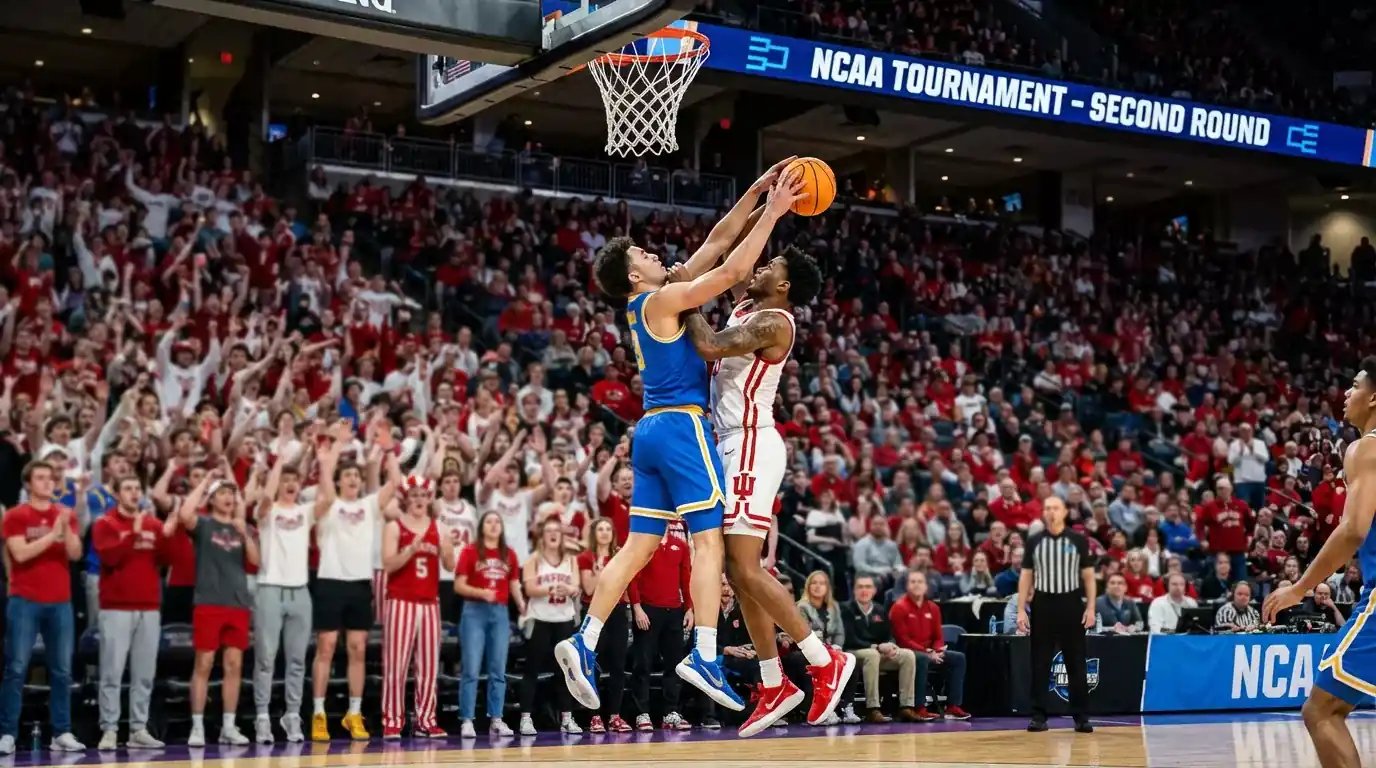
Three in the morning, mid-March, and I am screaming at my television as a 15-seed drains a buzzer-beater to knock off a powerhouse programme. My neighbours probably think I have lost my mind. They might be right. March Madness does something to basketball bettors that no other event can replicate – sixty-seven games crammed into three weeks, single-elimination chaos, and upsets that would be inconceivable in the NBA.
For UK punters, March Madness presents both opportunity and challenge. The tournament occupies a peculiar space – wildly popular in America, generating billions in wagers, yet relatively under-followed in Britain. That information gap can work in your favour if you invest time understanding college basketball’s unique dynamics. NBA viewership in the UK grew 40% since 2019, with viewers under 30 driving the surge. Some of that audience has discovered college hoops as a gateway, creating a new generation of British March Madness enthusiasts.
This guide covers everything you need to bet the NCAA tournament from the UK. I will explain the format, where British punters can access markets, and strategies for identifying upsets before they happen. The tournament rewards preparation and punishes casual betting more severely than almost any other sporting event. If you want to engage March Madness profitably rather than just entertainingly, read on.
NCAA Tournament Bracket Structure and Matchups
The tournament format creates the drama. Sixty-eight teams qualify – thirty-two automatic bids for conference champions plus thirty-six at-large selections chosen by a committee. Those teams are seeded 1 through 16 in four regional brackets, then paired so that 1-seeds face 16-seeds, 2-seeds face 15-seeds, and so forth. Single elimination throughout. Lose once and your season ends.
First Four games eliminate the lowest seeds down to sixty-four teams. Then the real tournament begins with the Round of 64, followed by the Round of 32, Sweet Sixteen, Elite Eight, Final Four, and Championship. The entire bracket plays out over approximately three weeks, with the most intense betting action concentrated in the opening weekend when thirty-two games occur across Thursday through Sunday.
Seeding correlates with expected performance but imperfectly. Since 1985, 1-seeds have won roughly 99% of first-round games against 16-seeds, but the recent upsets – UMBC over Virginia, Fairleigh Dickinson over Purdue – prove nothing is guaranteed. As seeds get closer, the gap shrinks dramatically. 8-versus-9 matchups are essentially coin flips, while 5-versus-12 games produce upsets frequently enough that “picking the 12-seed” has become conventional wisdom.
The committee seeds teams based on full-season performance, strength of schedule, and eye test evaluations. Conference tournament results immediately before Selection Sunday influence seeding and even inclusion for bubble teams. A mid-major programme running the table in their conference tournament earns an automatic bid regardless of how weak their regular season appeared.
Unlike NBA playoffs where familiarity builds through seven-game series, NCAA tournament opponents often have never faced each other. Coaches have days to prepare game plans. Players face schemes they have not seen all season. This unfamiliarity creates variance that straight statistical analysis cannot fully capture.
Where UK Punters Can Bet March Madness
Major UK sportsbooks cover March Madness comprehensively, though market depth varies significantly. The largest operators offer spreads, moneylines, and totals for every tournament game. Smaller books might cover only the higher-profile matchups or reduce their maximum stakes on college basketball compared to NBA lines.
Online remote betting in the UK grew 8% year-over-year to reach £1.42 billion in quarterly gross gaming yield. That growth has pushed sportsbooks to expand American sports coverage, including college basketball. Where five years ago finding March Madness props at UK books was difficult, today most major operators offer player props, team totals, and alternative spreads throughout the tournament.
Timing matters enormously for March Madness betting in the UK. Games tip off during afternoon and evening hours in America, translating to late evening and overnight for British bettors. First-round games might start at 5 PM UK time and run until 4 AM. If you plan to bet live, prepare for some late nights. If you prefer pre-game betting, lines typically stabilise 12-24 hours before tip-off.
Line shopping becomes essential during March Madness. Spreads vary more across books for college games than for NBA games, partly because bookmakers have less confidence in their college basketball models. A 3.5-point favourite at one shop might be 4.5 at another. Those differences compound across a full tournament slate of bets.
Futures markets open months before the tournament. Championship odds evolve through the regular season, conference tournaments, and bracket reveal. By Selection Sunday, the field is set and odds crystallise based on actual matchups. I find the best futures value in the window between conference tournaments ending and the bracket being announced – teams that won their conference tournament as underdogs often remain undervalued.
Spotting Upsets in March Madness
Everyone wants to pick the Cinderella that dances to the Final Four. Most people do it wrong. They look for names they recognise or teams with catchy mascots. Profitable upset hunting requires systematic analysis of what actually causes tournament upsets.
Experience matters more in college than professional basketball. Teams with senior-heavy rosters have faced pressure situations, managed game-time adjustments, and developed the mental resilience that tournament basketball demands. A 12-seed with four seniors might handle the tournament atmosphere better than a 5-seed relying on freshmen, regardless of what regular-season metrics suggest.
Style matchups create upsets. Slow-tempo teams that grind possessions down and defend the half-court can frustrate talented opponents who prefer fast-paced games. When a defensive-minded mid-major faces a high-powered but defensively suspect power conference team, the upset probability exceeds what seeding implies. Look for stylistic mismatches rather than assuming the better-seeded team simply “figures it out.”
Three-point shooting variance drives single-game outcomes more than any other factor. A team that shoots 40% from three in the regular season might shoot 25% in a given tournament game due to pure randomness. Teams that depend heavily on three-point shooting carry higher upset risk than those with balanced offensive attacks. Conversely, underdog teams with elite perimeter shooters can catch fire and overwhelm favourites in ways that do not happen over seven-game NBA series.
Coaching pedigree matters in the tournament specifically. Coaches with multiple tournament runs understand preparation, game planning against unfamiliar opponents, and managing the unique pressures of single-elimination. A first-time tournament coach facing a veteran might be outcoached even if his roster is superior on paper.
Avoid picking upsets in every game. The mathematics do not support it. 1-seeds and 2-seeds advance at rates exceeding 85%. The value lies in selectively identifying the spots where lower seeds have genuine advantages rather than blanket contrarianism. One or two well-reasoned upset picks per round outperforms throwing darts at every game.
How can I bet on March Madness from the UK?
Major UK sportsbooks offer NCAA tournament markets including spreads, moneylines, totals, and futures. Access these through licensed bookmaker websites and apps. Games tip off late evening through overnight UK time, so prepare for unusual betting hours during the tournament.
What seeds cause the most upsets?
Historically, 12-seeds upsetting 5-seeds occurs most frequently relative to seed expectation. This matchup produces upsets roughly 35% of the time. The 11-over-6 and 10-over-7 matchups also overperform upset expectations. First-round 15-over-2 upsets happen about 6% of the time.
Are March Madness odds different from NBA?
Yes. College basketball lines carry wider margins due to less betting volume and greater uncertainty. Spreads vary more across bookmakers, making line shopping more valuable. Player props are less common and less sharp than NBA props. Variance is higher due to single-elimination format.
Created by the ”how to bet Basketball” editorial team.