NBA Rest Days Betting: Back-to-Back Schedules and Odds Value
 Available in US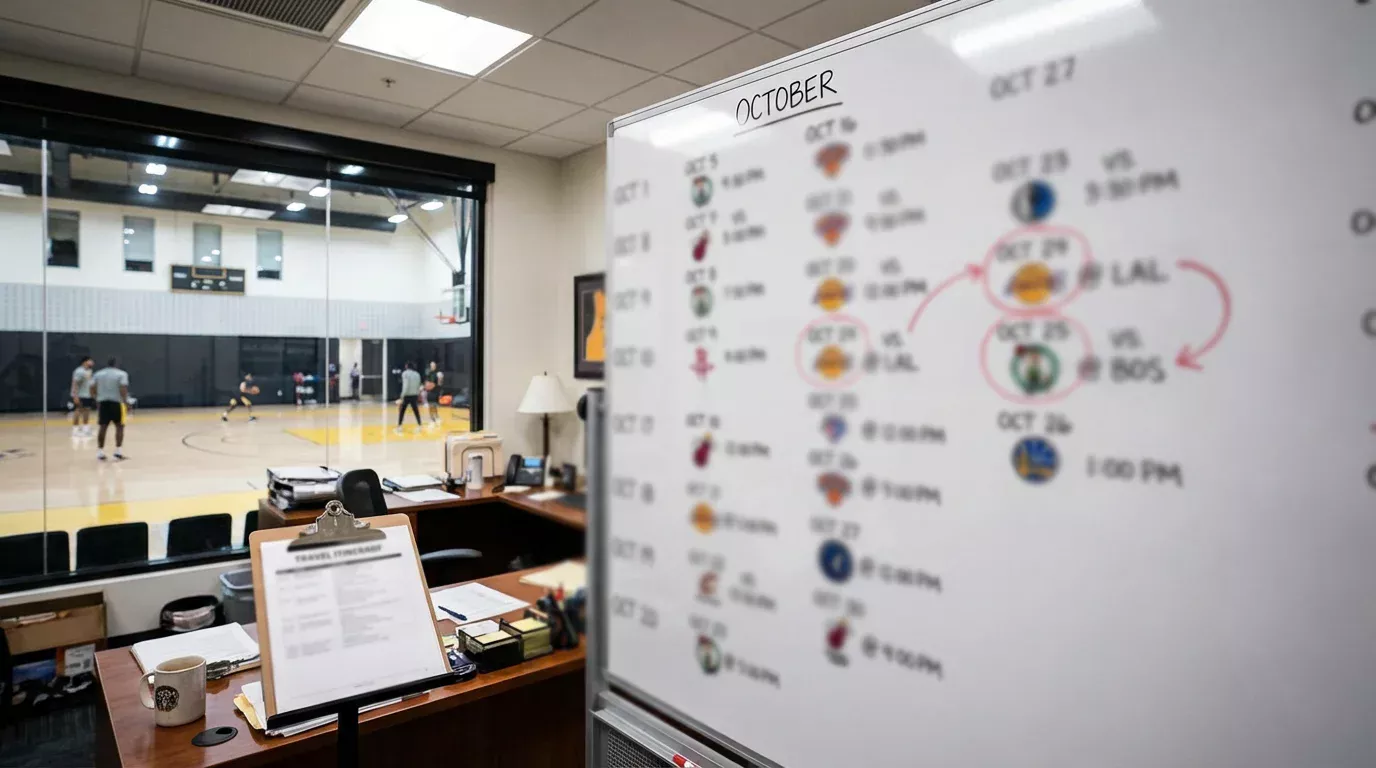
February 2024. The Celtics had just dismantled the Bucks by 15 points in Boston. The next night, they travelled to Miami and lost outright as six-point favourites. Nothing about the rosters had changed overnight. The difference was simple: one team was playing its second game in two nights after a flight, while the other was rested and waiting. That back-to-back loss cost me money but taught me something valuable about schedule-based betting.
The 2025-26 NBA season delivered the highest viewership in 15 years, and that audience has grown sophisticated enough to understand that not all games carry equal competitive intensity. Schedule spots create systematic advantages and disadvantages that affect performance in predictable ways. Teams on rest advantages outperform their season statistics. Teams in fatigue spots underperform. The market accounts for these factors, but not always accurately.
This guide covers schedule-based betting for UK punters. I will explain how back-to-backs affect performance, how to quantify rest advantages, and how travel compounds fatigue effects. If you are interested in spread betting specifically, understanding schedule context improves your analysis considerably.
Back-to-Back Schedule Fatigue and Player Performance
An NBA back-to-back means playing games on consecutive nights. During an 82-game regular season compressed into roughly 170 days, every team faces multiple back-to-back situations. The schedule makers try to distribute these fairly, but some teams inevitably face more difficult configurations than others. Identifying these spots before they occur creates betting opportunities.
Performance drops measurably on the second night. Teams shoot worse from three – roughly 1-2% below their season average. Defensive intensity declines as tired legs cannot stay in front of drives or contest shots as effectively. Rebounding effort suffers because boxing out requires the kind of physical commitment that fatigue undermines. These effects are small individually but compound across a full game.
Spread results tell the story clearly. Teams on the second night of back-to-backs cover at lower rates than their season ATS average. The difference is not enormous – perhaps 2-3% below break-even – but it is consistent enough across large sample sizes to confirm the effect exists. Markets price this in, but the question is whether they price it correctly.
Totals behave interestingly in back-to-back contexts. You might expect fatigue to lower scores, and defensive lethargy often does allow more opponent points. The net effect varies – some back-to-back games go over because neither team can defend, others go under because offensive execution suffers more than defensive effort. Context matters more than simple “tired equals under” thinking.
Star players on the second night often see reduced minutes, both due to fatigue and coaches preserving them for more important upcoming games. When stars play fewer minutes, their teams’ performance drops accordingly. Tracking which coaches aggressively rest stars versus which play them through fatigue helps predict second-night outcomes.
Quantifying Rest Advantage
Rest advantage measures the difference in days off between two teams entering a matchup. A team with three days off facing one on a back-to-back has a rest advantage of +3. The larger the advantage, the more significant the expected impact. Research suggests each day of rest advantage is worth roughly 0.5 to 1 point against the spread.
The most extreme situations involve rest mismatches exceeding three days. A team coming off the All-Star break with eight days off facing a road team on their second back-to-back in a week creates a substantial rest differential. These extreme spots are rare but often mispriced because casual bettors do not track schedules systematically.
Recent game context matters alongside pure rest. A team with two days off after a triple-overtime game might be more fatigued than one with one day off after a comfortable win. Injury status sometimes reflects hidden fatigue – a player listed as questionable with a knee issue might be managing cumulative wear rather than a specific incident.
Season timing affects how much rest matters. Early season back-to-backs hit harder because bodies have not yet adapted to the NBA grind. Mid-season back-to-backs are most routine. Late-season back-to-backs near playoff positioning deadlines might see increased effort overcoming fatigue because the stakes demand it.
Veteran-heavy teams manage back-to-backs worse than young teams. Older players need more recovery time between games. A 35-year-old star on the second night of a back-to-back shows more decline than a 23-year-old in the same situation. Roster age composition should factor into your fatigue assessment.
Travel Distance and Time Zones
The NBA’s continental footprint creates travel challenges unlike any other major league. A Western Conference road trip might span three time zones over four games in six nights. An Eastern team visiting the West Coast crosses three time zones, plays a game that tips off at what feels like 1:30 AM body time, then flies home. These travel burdens compound fatigue effects.
West-to-East travel hits harder than East-to-West. Teams travelling eastward effectively lose hours from their day, arriving to face opponents on home time while their bodies think it is three hours earlier. Games starting at 7 PM Eastern feel like 4 PM for Pacific teams – before their normal warm-up routines would even begin at home.
Road trip length matters beyond individual games. The first road game after a home stand typically shows little fatigue effect because teams arrive fresh. By the fourth game of a five-game road trip, accumulated travel, unfamiliar beds, and time away from families all compound. Extended road trips are particularly valuable to fade.
Altitude affects specific venues differently than general travel. Denver sits a mile above sea level, and visiting teams not acclimated to thin air struggle with conditioning. Late-game energy disappears as lungs work harder. The Nuggets’ home-court advantage consistently exceeds league averages partly due to this physiological factor.
International games in Mexico City or Paris add extreme travel demands. These occasional events require transoceanic flights, maximum jet lag, and unfamiliar environments. Lines adjust heavily, but whether they adjust enough depends on the specific teams and their adaptability to unusual circumstances.
Build a schedule tracking system that flags high-value rest situations before they occur. The NBA releases full schedules before the season, allowing you to identify extreme rest mismatches months in advance. Mark these dates on your calendar and monitor line movement as the games approach. Preparation creates opportunity that reactive betting cannot match.
Combine rest analysis with other factors rather than betting rest alone. A team on a back-to-back at home against a team on extended rest still has home-court advantage. A fatigued favourite might still be the superior team by enough margin to cover. Rest context adjusts your projections but should not override fundamental team quality assessments entirely.
How do back-to-backs affect NBA betting?
Teams on the second night of back-to-backs cover spreads at lower rates than their season average. Performance drops in shooting, defence, and rebounding due to fatigue. The effect is worth roughly one to two points against typical spreads.
Should I fade teams on second night?
Fading back-to-back teams can be profitable but is not automatic. Consider the rest advantage differential, travel involved, roster age, and whether stars will rest or play through. The market prices most of this in, so edges require finding mispricings.
Does travel distance matter in NBA betting?
Yes. Long-distance travel compounds fatigue, especially when crossing time zones. West-to-East travel hits harder than East-to-West. Extended road trips accumulate fatigue game by game. Altitude in Denver adds additional physiological challenges.
Created by the ”how to bet Basketball” editorial team.