NBA Referee Betting Data: Officiating Impact on Match Totals
 Available in US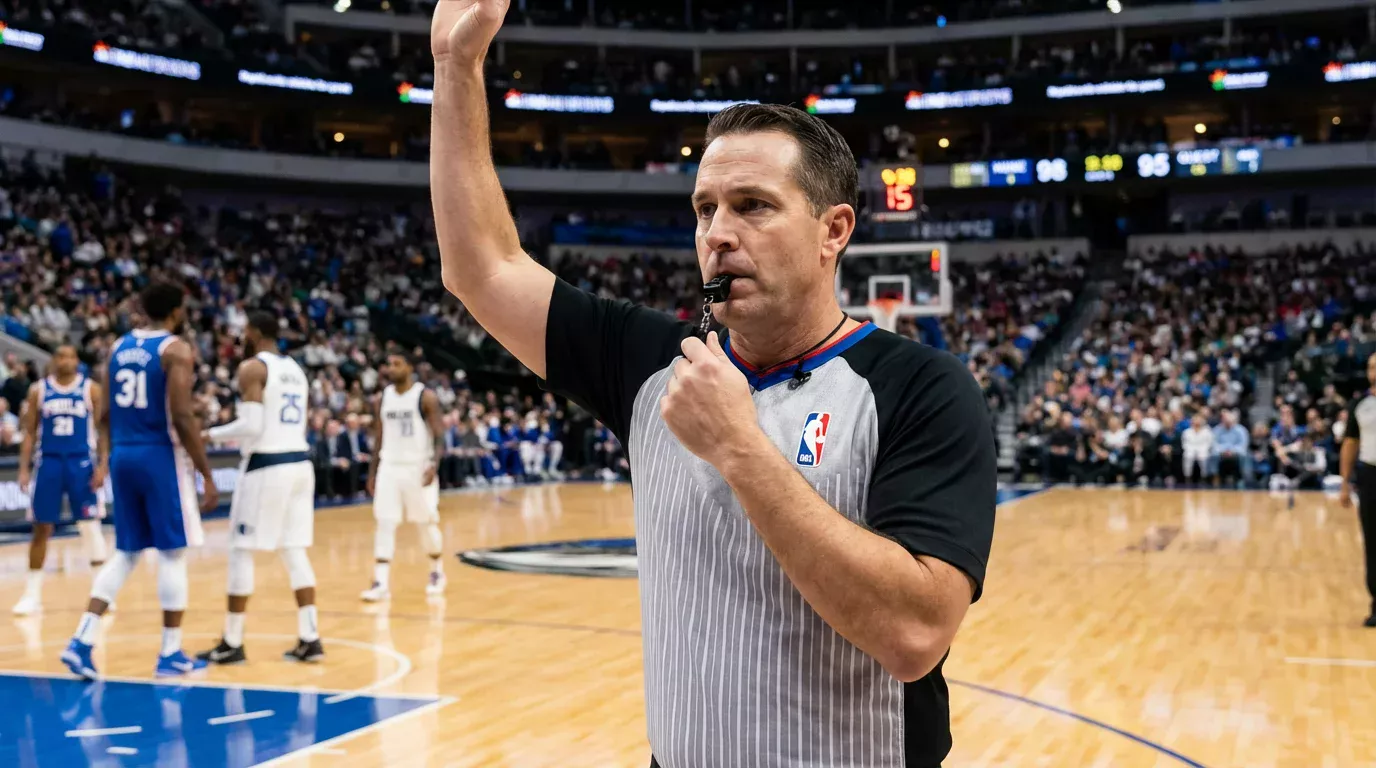
The referee assignments came out at 5:30 PM. I saw Scott Foster on the crew and immediately checked the over/under. Foster’s games historically run slightly higher scoring due to his quick whistle creating more free throw opportunities. The total at 225.5 looked low for a Foster game between two high-scoring teams. That context – information most bettors never check – creates edge.
NBA referees are not interchangeable. Each official has tendencies that affect how games play out: foul calling frequency, tolerance for physical play, and implicit biases that statistical analysis can detect. While the market generally ignores referee assignments, bettors who track official tendencies can find value in specific matchups.
This guide covers NBA referee betting for UK punters. I will explain where to find referee assignments, how to analyse official tendencies, and which situations create actionable edges. For broader context on totals betting fundamentals, that guide provides essential background.
NBA Referee Foul Tendencies and Pace Impact
Each NBA referee develops distinct patterns over their career. Some officials call tight games with frequent whistles, sending teams to the free throw line often. Others “let them play,” allowing physical contact that different crews would penalise. These tendencies remain consistent enough across seasons to provide predictive value.
Foul calls per game vary meaningfully between officials. A crew averaging 45 fouls per game creates different totals expectations than one averaging 38 fouls. More fouls mean more free throws, longer stoppages, and disrupted offensive rhythm. High-foul crews typically correlate with higher totals due to free throw volume.
Home team favouritism appears marginally in the data. Studies show home teams receive slightly more favourable whistle treatment – approximately one extra foul call per game goes against the road team. While small, this effect can influence close games and might be worth noting for spread betting on tight matchups.
Veteran versus rookie referee crews behave differently. Experienced officials maintain consistency under pressure, while newer refs may get caught up in big moments or make inconsistent calls that swing outcomes. Playoff-experienced crews tend to produce more predictable outcomes than crews featuring first-year officials.
Star player treatment varies by official. Some referees give established stars generous whistle treatment while others officiate agnostic of reputation. If your bet depends on a star player’s scoring output, checking whether the assigned referee historically favours or penalises that player can inform prop decisions.
Finding Referee Assignment Information
The NBA releases referee assignments the morning of each game, typically by 9 AM Eastern (2 PM UK time). This gives bettors several hours before tip-off to incorporate referee analysis into their decisions. Official assignments appear on NBA.com and various sports news sites.
Third-party websites track historical referee statistics. These resources compile official tendencies over multiple seasons – games refereed, average fouls called, over/under rates for their games, and other metrics. Bookmarking one or two reliable referee tracking sites saves research time.
Twitter accounts specialising in referee analysis often share relevant statistics when assignments are announced. Following these accounts provides quick summaries without requiring you to dig through raw data. The community has already done much of the analytical work.
Line movement after referee announcements sometimes reveals sharp money positioning. If a total moves significantly between morning announcement and evening tip-off, referee tendencies might explain the shift. Sharps incorporate referee data that recreational bettors ignore.
Playoff referee assignments receive heightened attention because stakes increase and crew selection becomes more deliberate. The league assigns its most experienced officials to important games, creating different dynamics than regular season referee rotation.
Applying Referee Analysis
Totals betting benefits most from referee analysis. The direct connection between foul frequency and free throw opportunities creates measurable effects on scoring. A high-foul crew paired with two aggressive-attacking teams creates over situations. A low-foul crew paired with defence-first teams supports unders.
Spread betting based on referee data is riskier because the effects are more diffuse. While home whistle bias exists, the magnitude is too small to drive spread betting decisions independently. Referee analysis should supplement team analysis rather than replace it for spread betting.
Player props on free throw-dependent scorers correlate with referee assignments. A player who gets to the line frequently benefits from high-foul crews. A player who relies on perimeter shooting sees less impact from referee style. Match player scoring approach to referee tendency for prop edges.
Avoid overweighting referee analysis relative to team quality. The best referee analysis provides perhaps 1-2% edge in specific situations. It cannot overcome significant team quality mismatches. Use referee data as a tiebreaker or small overlay rather than a primary betting thesis.
Track your referee-based bets separately to evaluate whether your analysis adds value. The edges are subtle enough that you need significant sample sizes to confirm profitability. What feels like a strong pattern in 20 games might disappear across 200 games.
Building Your Referee Database
Start by tracking the five or six referees who work the most games each season. These officials appear frequently enough that their tendencies provide actionable patterns. Lesser-used referees lack sufficient sample sizes for reliable analysis, so focusing on the regulars maximises your analytical investment.
Record over/under results for games each referee works, categorised by the expected pace of the matchup. A high-foul referee might push totals over in slow-paced defensive games but have neutral effect on already fast-paced shootouts. The interaction between referee style and game context matters more than referee tendency alone.
Note how specific referees interact with specific teams. Some teams consistently see their games go over when certain officials work them – perhaps the team’s aggressive driving style draws more fouls from whistle-happy refs. These team-referee correlations provide more targeted edges than general referee tendencies.
Update your database throughout the season because referee tendencies can shift. An official who called tight games early in the season might loosen up as the year progresses, or vice versa. Weighting recent games more heavily than historical patterns captures these within-season adjustments.
Compare your referee analysis to closing line movement. If you identify a referee-based edge but the line moves against your position before tip-off, the market has likely incorporated the same analysis. Referee edges are most valuable when you act on the information before sharper money moves the line. The window between assignment release and tip-off represents your opportunity.
Combine referee tendencies with team playing styles for refined projections. A high-foul referee matters more when both teams attack the basket aggressively than when they shoot primarily from three-point range. The interaction between official tendency and team style determines actual impact on game outcomes.
When are NBA referee assignments released?
The NBA releases referee assignments on the morning of each game, typically by 9 AM Eastern (2 PM UK time). Assignments appear on NBA.com and various sports news sites, giving bettors several hours to incorporate the information before tip-off.
Do referees affect NBA betting totals?
Yes. High-foul referees create more free throw opportunities and longer games that tend toward higher scoring. Low-foul referees let physical play continue, potentially suppressing totals. The effect is meaningful enough to consider for totals betting.
Which NBA referees call the most fouls?
Referee tendencies change over time, so check current season data rather than historical reputation. Third-party websites track fouls per game by official. Generally, a range of 38-46 fouls per game covers most crews, with meaningful variation within that range.
Written by the editors at how to bet Basketball.